
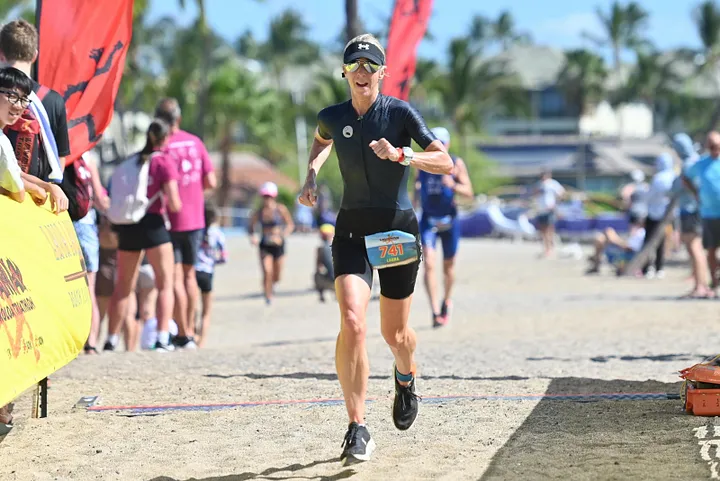
Picture this: You’re halfway through an ultramarathon, legs screaming, but you know the finish line is still miles away. Do you blow up now and crawl to the end, or do you dial back your pace just enough to maintain the performance that got you there? That’s exactly where I find myself right now—not on a trail, but in life itself.
It’s been a while since my last article, and frankly, I’ve been living in that ultramarathon mindset. Between celebrating our daughter’s beautiful wedding in South Africa (see photo below), snagging 2nd place at the Hawaii Lavaman triathlon (proof that sometimes pacing pays off!), gearing up for a cycling odyssey through the Dolomites with up to 8,500 feet of daily elevation gain, launching a business this fall, and yes—discovering that ultrarunning makes triathlon feel like a warm-up—I’ve been wrestling with a familiar high-achiever’s dilemma:
How do you take your foot off the gas pedal without feeling like you’re coasting? How do you dial it back without dialing it down?
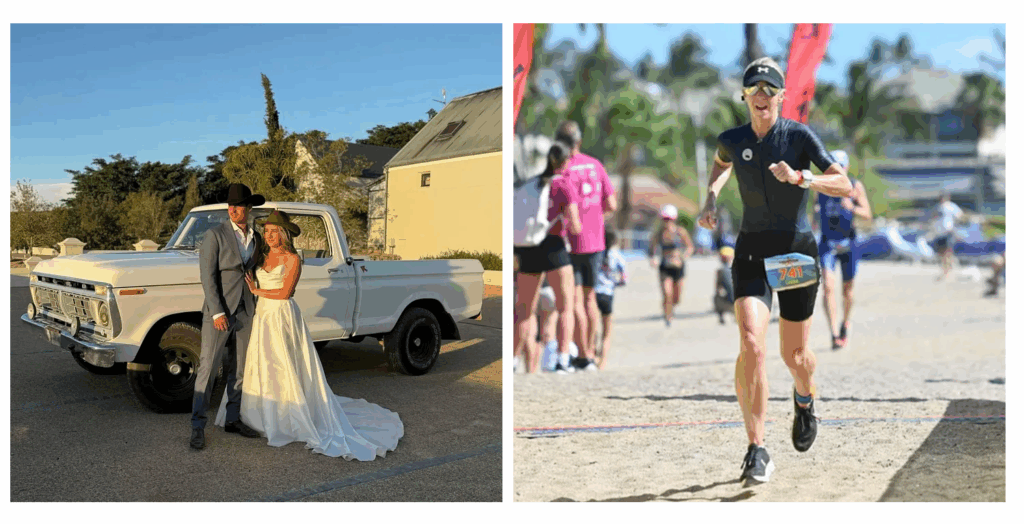
The answer, I’m learning, lies in the art of pacing—something every endurance athlete knows (hello, 2nd place validation!) but few of us apply to the marathon of high-performance living.
Permission to Pace: Why High Performers Struggle with Strategic Deceleration
Here’s what I’ve learned about being a high performer: it means giving everything I have, but only to the things that matter most—the highest priorities that can create the greatest impact. Sounds logical, right? Yet here I am, a classic over-achiever who feels guilty every time I slow down or take a break, even though I know the importance of rest and recovery like gospel.
The internal voices are relentless. You’re falling behind. You’ll miss a critical opportunity. You’re not producing enough output. These whispers become shouts when I’m trying to prioritize family time and presence, knowing it means taking time away from building what could be a successful business. The irony isn’t lost on me—I know time with my fast-growing kids is fleeting and infinitely more important, yet the guilt persists.
But here’s the thing that always surprises me: every time I’ve been forced to slow down—whether dialing back athletic training to let gains set in, or stepping back from tactical work to think strategically—I achieve greater things in the end. When I’m more being than doing, I see things more clearly and focus on higher impact. It’s like the difference between sprinting through fog versus walking with clear vision.
In racing, this feels intuitive. I understand how my body will react if I over push versus self-regulate for sustainability while staying competitive. I can control more variables. But in business? It feels like there are forces outside my control everywhere. As I approach this summer reset—knowing there’s so much to be done to launch a business, worrying about timeline pressures, using savings to fund this period, questioning whether it will all work out—the permission to pace feels more like a luxury I can’t afford.
Except it’s not a luxury. It’s the only strategy that’s worked every single time I’ve been brave enough to use it.
You’re in Good Company
As I’m writing this, I’m reminded that I’m not alone in this strategic pacing dilemma. John John Florence—32 years old, three-time world surfing champion, at the absolute peak of his career—just announced he’s taking a break from the 2025 World Surf League Championship Tour. Not because he’s burned out or injured, but to focus on other projects, explore his surfing in different ways, and be present for his newborn son, Darwin.
Think about that for a moment. The best surfer in the world is stepping back from competition when he could easily dominate for years to come. He’s choosing strategic deceleration at his peak performance level. If John John Florence can give himself permission to pace, maybe we all can.
The lesson? Sometimes the highest performers know that the most powerful move isn’t the next wave—it’s knowing when to paddle back out to sea and wait for the right one.
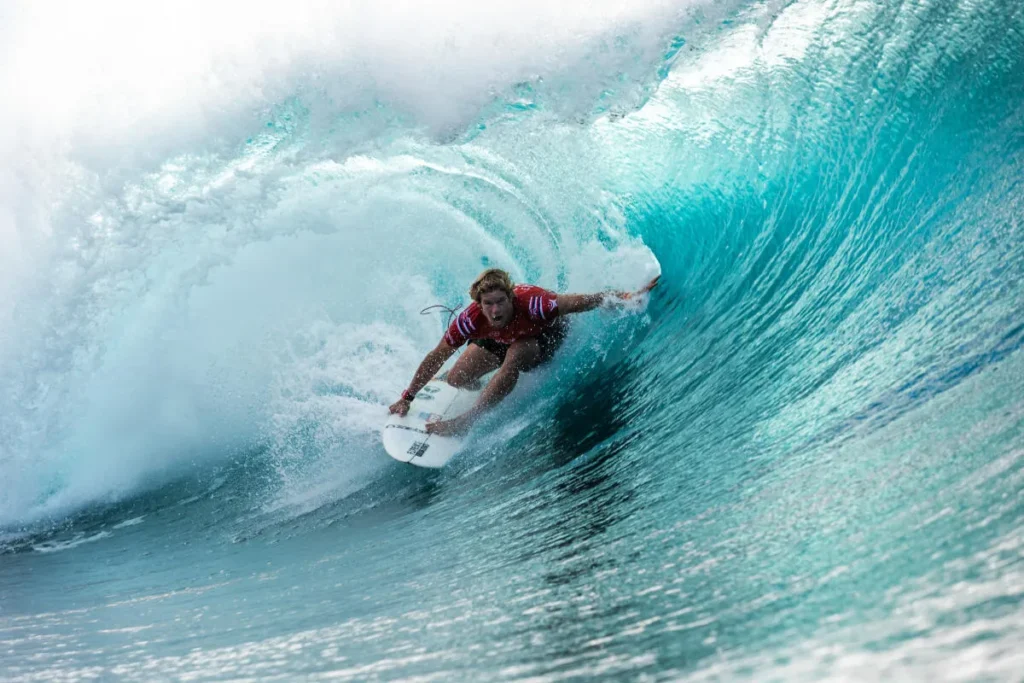
photo: World Surf League
Questions for Self-Reflection:
· What voices do you hear when you consider slowing down, and whose voices are they really?
· Where in your life do you feel most guilty about pacing yourself, and what is that guilt actually protecting?
· Can you identify a time when strategic deceleration led to better results than pushing harder?
Here’s how to start:
Your Strategic Pacing Playbook: 4 High-Impact Shifts
1. Reframe Your Productivity Metrics
From: Daily output and busyness
To: Weekly impact and strategic progress
The Tool: At the end of each week, ask yourself: “What’s the one thing I accomplished that will still matter in 6 months?” If you can’t answer easily, your pace is off.
2. Build Your “Pace Permission” Ritual
From: Guilt-driven decision making
To: Intentional energy allocation
The Tool: Before any major decision about where to spend your time, pause and ask: “Am I sprinting a marathon right now?” If yes, give yourself explicit permission to dial back without dialing down your standards.
3. Create Strategic Buffers
From: Operating at 100% capacity
To: Operating at 80% with surge capacity
The Tool: Schedule 20% of your time as “unplanned” buffer space. This isn’t laziness—it’s performance insurance. When opportunities arise or priorities shift, you have the capacity to respond powerfully.
4. Practice the “Good Enough” Muscle
From: Perfectionism in low-stakes areas
To: Excellence where it counts most
The Tool: Identify 3 areas this week where you can practice “good enough” (email responses, meeting prep, household organization). Notice how this frees up energy for what actually matters—your family moments, your business vision, your race performance.
Here’s what I’m learning in real time: Permission to pace isn’t permission to settle. It’s permission to perform at your highest level for the long haul. And that, my friends, is the ultimate competitive advantage.